
When people encounter racism or discrimination, they don’t all respond in the same way. Some calmly challenge the remark, some file a complaint, others confront the offender aggressively—and many say nothing at all.
Category: Social Sciences
-

Why some people speak up against prejudice, while others do not
-

Most AI assistants are feminine—and it's fueling dangerous stereotypes and abuse
In 2024, artificial intelligence (AI) voice assistants worldwide surpassed 8 billion, more than one per person on the planet. These assistants are helpful, polite—and almost always default to female.
Continue Reading
-

Pushback couldn't derail this researcher's work in criminology
There’s been much published about the Cambridge-Somerville Youth Study, which looked at the impact of intervention on delinquency in young Massachusetts boys. The groundbreaking research followed up with study participants for decades after the…
Continue Reading
-
Girls are happiest at school—for good reasons, finds Norwegian study
A new survey shows that there is a clear difference between girls and boys when it comes to well-being at school. “Girls are happier than boys. This applies both in class and at school in general,” says Professor Hermundur Sigmundsson at the…
Continue Reading
-
People are swayed by AI-generated videos even when they know they're fake, study shows
Generative deep learning models are artificial intelligence (AI) systems that can create texts, images, audio files, and videos for specific purposes, following instructions provided by human users. Over the past few years, the content generated…
Continue Reading
-
For couples, one affectionate communicator can help both partners feel relationship satisfaction
If you really like holding hands and saying “I love you” but your partner doesn’t, your relationship is still probably better off than if both of you had a modest interest in expressing affection.
Continue Reading
-

A century-old Stonehenge mystery may finally be solved
New research from Curtin University offers the clearest scientific support so far that people, rather than glaciers, carried Stonehenge’s well known bluestones to the ancient monument. The findings take aim at one of archaeology’s longest running…
Continue Reading
-
A brief history of sugar
A few thousand years ago, sugar was unknown in the western world. Sugarcane, a tall grass first domesticated in New Guinea around 6000BC, was initially chewed for its sweet juice rather than crystallized. By around 500BC, methods to boil…
Continue Reading
-
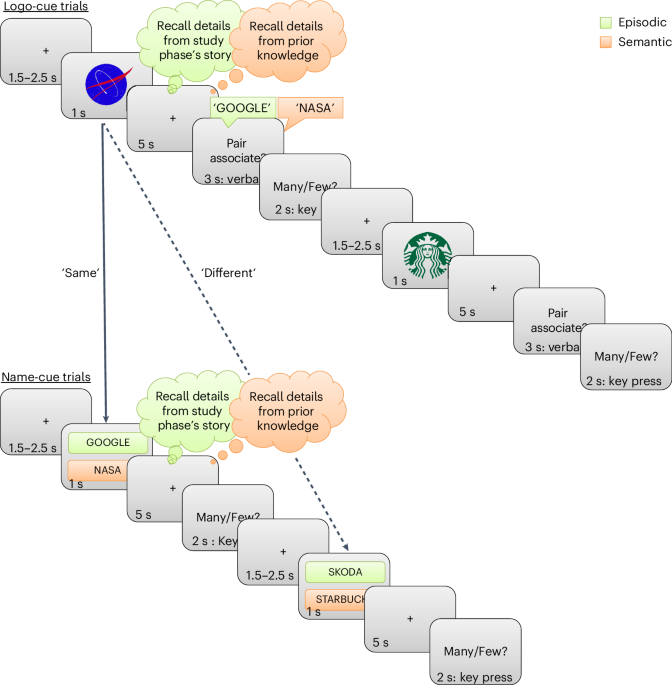
Neural activations and representations during episodic versus semantic memory retrieval
Tulving, E. in Organization of Memory (eds Tulving, E. & Donaldson, W.) 381–403 (Academic Press, 1972).
Tulving, E. Memory and consciousness. Can. Psychol. Can. 26, 1–12 (1985).
Nebes, R….
Continue Reading