
A leading climate scientist has sought to set the record straight over “demonstrably incorrect” claims made in a major U.S. government report that misrepresented his work and downplayed the role of human activity in global warming.
Category: Earth
-
DOE climate report 'demonstrably incorrect', say scientists in new analysis
-
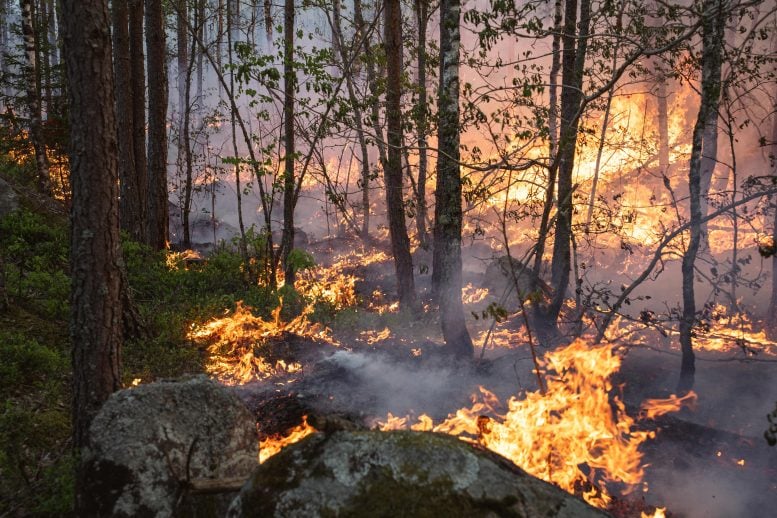
Wildfires in the Arctic May Be Releasing Far More Carbon Than We Thought
Northern wildfires may be unleashing hidden reservoirs of ancient carbon — and climate models are missing much of it. Wildfires sweeping across the vast boreal forests of Alaska, Canada, Scandinavia, and Russia could be causing more climate…
Continue Reading
-
Stress-testing the Cascadia Subduction Zone reveals variability that could impact how earthquakes spread
The Cascadia Subduction Zone is unusually quiet for a megathrust fault. Spanning more than 600 miles from Canada to California, the fault marks the convergence of the Juan de Fuca and North American plates. While other subduction zones produce…
Continue Reading
-
Are climate models detecting monsoon changes a decade too early? 'Super-simulations' say yes
Changes in rainfall within global monsoon regions affect the livelihoods of billions. For years, climate models have suggested that the fingerprint of human-caused climate change on monsoons would become visible by a certain time. But what if…
Continue Reading
-
Coral proxy data reveals century-long slowdown of South China Sea throughflow under global warming
The South China Sea Throughflow (SCSTF) serves as a critical oceanic conveyor belt for heat and freshwater, mediating water exchanges between the South China Sea (SCS) and the Pacific and Indian oceans while regulating key processes such as heat…
Continue Reading
-
Drone LiDAR surveys of abandoned roads reveal long-term debris-flow hazards
A research team led by University of Tsukuba has developed a new method to estimate long-term debris supply from steep slopes by measuring debris accumulated on decades-old abandoned roads. Debris supplied by rockfall and related slope processes…
Continue Reading
-
Atmospheric dust: The overlooked suspect in urban air pollution
Cities are rapidly becoming the defining residential space of human life. Over 55% of the global population lived in urban areas in 2018, a proportion projected to reach nearly 68% by 2050, according to the United Nations (UN).
Continue Reading
-
Greenland's largest glacier could soon reach a tipping point, scientists say
Greenland’s largest glacier, Jakobshavn Glacier, may be edging closer to a critical threshold as meltwater runoff from the Greenland Ice Sheet accelerates in ways not seen in over a century, according to new research published in Climate of the…
Continue Reading
-
Improved short-term sea level change predictions achieved with better AI training
Sea level can temporarily change for a variety of reasons—atmospheric pressure shifts and water accumulation from wind and storms, for example—which can cause flooding in coastal communities and affect maritime industry operations. The key to…
Continue Reading
-
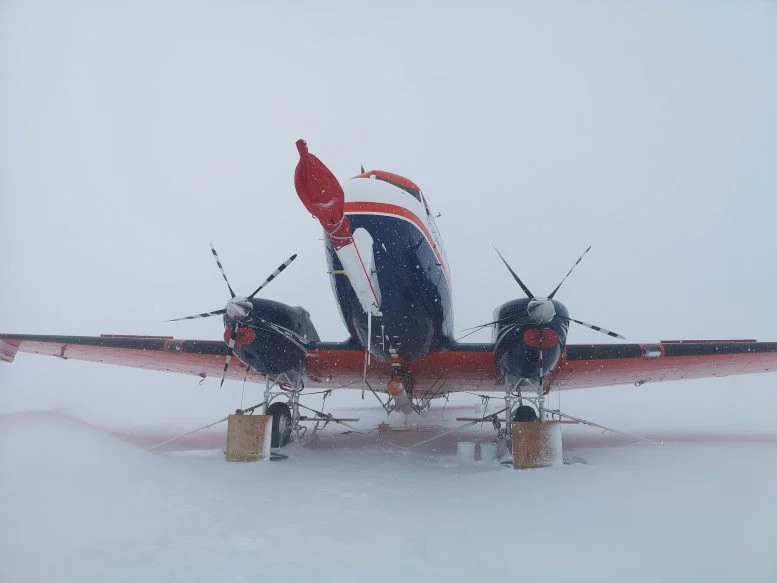
Antarctica’s Cloud Mystery: What’s Really Floating Above the Ice?
A rare deep-field Antarctic flight campaign has uncovered unexpected aerosol concentrations over the continent’s interior. Antarctica is a key driver of Earth’s climate because it reflects a large share of the Sun’s energy back into space….
Continue Reading