
Our planet is unique for its ability to sustain abundant life. From studies of the rock record, scientists believe life had already emerged on Earth at least 3.5 billion years ago and probably much earlier.
Category: Earth
-
How the ocean's hydrothermal systems made the first life on Earth possible
-
Increased soil salinity alters global inorganic carbon storage, finds study
A new global study shows that increasing soil salinity is systematically reshaping the storage and distribution of soil inorganic carbon (SIC), a key but often-overlooked part of terrestrial ecosystems. The findings, published in the Proceedings…
Continue Reading
-
Beneath Antarctica's largest ice shelf, a hidden ocean is revealing its secrets
Beneath Antarctica’s Ross Ice Shelf lies one of the least measured oceans on Earth—a vast, dark cavity roughly twice the volume of the North Sea.
Continue Reading
-
Rainfall–salinity link sustains prolonged La Niña events, study reveals
La Niña—a climate phenomenon characterized by unusually cool sea surface temperatures in the central and eastern tropical Pacific Ocean—can persist for multiple years, exerting significant climate impacts worldwide. In recent decades, such…
Continue Reading
-
Scientists solve 66 million-year-old mystery of how Earth's greenhouse age ended
A 66 million-year-old mystery behind how our planet transformed from a tropical greenhouse to the ice-capped world of today has been unraveled by scientists. Their new study has revealed that Earth’s massive drop in temperature after the…
Continue Reading
-
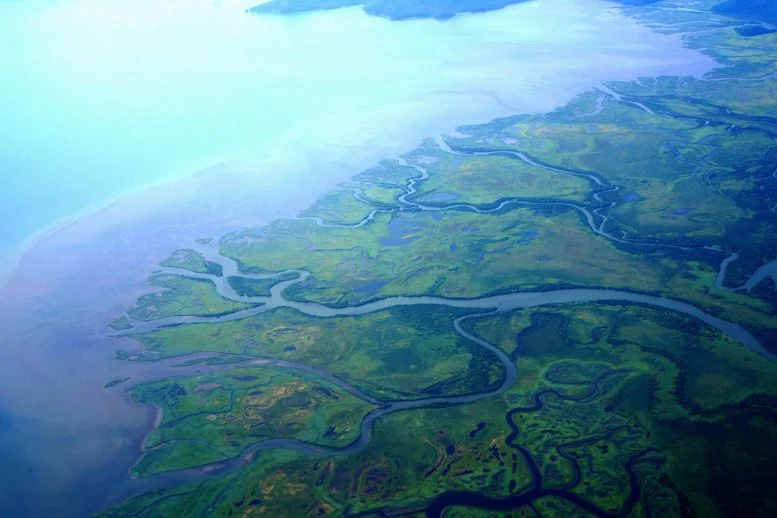
Hundreds of Millions at Risk As Major River Deltas Sink at Alarming Rates
Many of the world’s largest river deltas are quietly sinking faster than the oceans are rising. Scientists are warning that a hidden form of land loss is accelerating across many of the world’s most important river deltas, with consequences…
Continue Reading
-
Evidence of 'lightning-fast' evolution found after Chicxulub impact
The asteroid that struck the Earth 66 million years ago devastated life across the planet, wiping out the dinosaurs and other organisms in a hail of fire and catastrophic climate change. But new research shows that it also set the stage for life…
Continue Reading
-
World on track to breach 1.5°C target by 2030
Global average temperature increases could pass the 1.5 degrees Celsius threshold outlined in the Paris Agreement by the end of the decade, according to the EU’s Copernicus Climate Change Service, putting the world at greater risk of…
Continue Reading
-
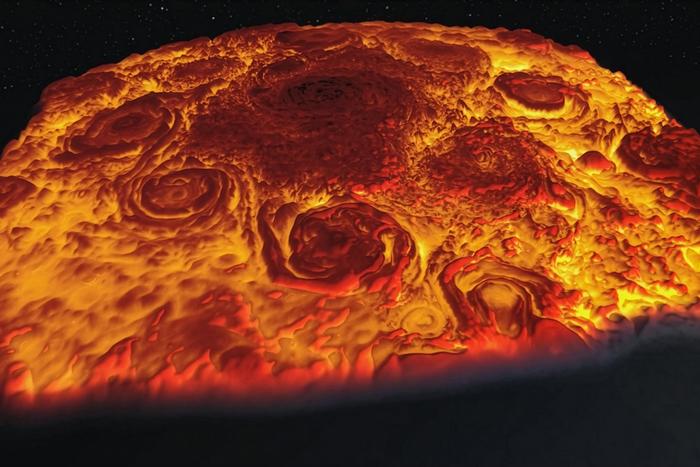
Why Jupiter and Saturn Have Different Polar Vortices
What processes are responsible for shaping Jupiter and Saturn’s polar weather? This is what a recent study published in the Proceedings of the National Academy of Sciences hopes to address as a team of…
Continue Reading
-
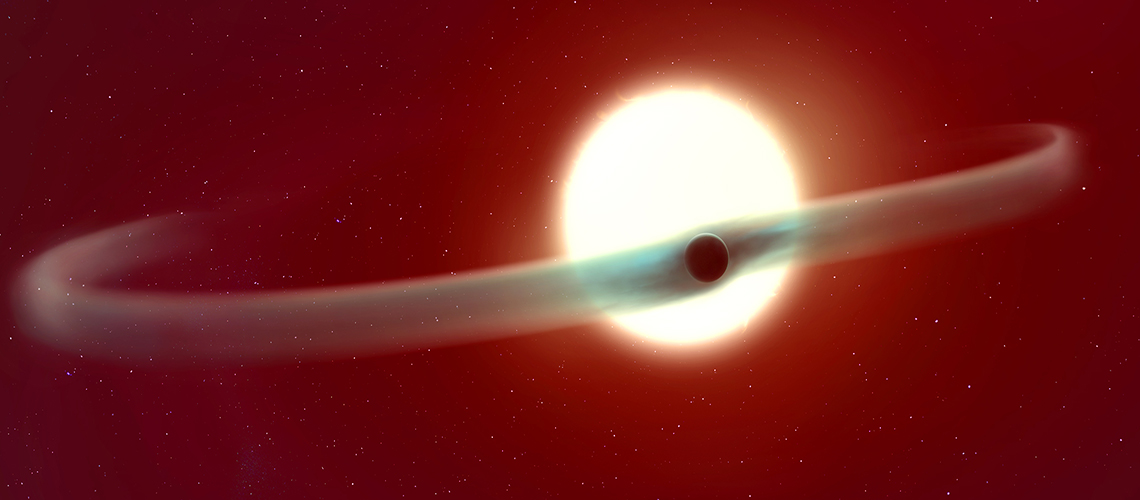
A Double Helium Tail Wraps Around WASP-121b
What effects can an exoplanet orbiting close to its star have on the former’s atmosphere? This is what a recent study published in Nature Communications hopes to address as a team of scientists investigated…
Continue Reading