
An interdisciplinary study confirms, for the first time, the oceanographic pathways that transport floating macroalgae from the coastal waters of Southwest Greenland to deep-sea carbon reservoirs, potentially playing a previously underappreciated…
Category: Earth
-
New evidence reveals how Greenland's seaweed locks away carbon in the deep ocean
-
Rain, not snow: Extraordinary warmth leaves mountains less snowy across the West
At UC Berkeley’s Central Sierra Snow Laboratory, located at 6,894 feet above sea level near Donner Pass, researchers collect detailed measurements of the snowpack each day. There is still some snow on the ground to measure, but less than they…
Continue Reading
-
Shrubs curb carbon emissions in China's largest desert, decades-long experiment shows
An experiment in western China over the past four decades shows that it is possible to tame the expansion of desert lands with greenery, and, in the process, pull excess carbon dioxide out of the sky.
Continue Reading
-
Saltier seas in spring double the chance of extreme El Niño events, study finds
Stronger El Niño events are more likely when springtime surface waters in the western Pacific Ocean become unusually salty, a new study in Geophysical Research Letters suggests. Traditionally, scientists have focused on temperature and wind…
Continue Reading
-
'So little we know': In submersibles revealing the deep sea
A dome-fronted submersible sinks beneath the waves off Indonesia, heading down nearly 1,000 meters in search of new species, plastic-eating microbes and compounds that could one day make medicines.
Continue Reading
-
A new look at trends in human deaths due to climate extremes
A new study of climate extremes since 1988 finds that many regions have seen increases in deaths due to floods, storms and extreme temperatures. In human terms, the harm comes not just from deaths, but also from lost labor and property damage….
Continue Reading
-
Microplastics in the atmosphere: Higher emissions come from land areas than from the ocean, study finds
The atmosphere is an important transport medium that carries microplastics to even the most remote parts of the world. These microplastics can be inhaled and pose a health risk to humans and animals. They can also settle out of the atmosphere and…
Continue Reading
-
Ancient Spanish trees reveal Mediterranean storms are intensifying
Ancient pine trees growing in the Iberian mountains of eastern Spain have quietly recorded more than five centuries of Mediterranean weather. Now, by reading the annual growth rings preserved in their wood, scientists have uncovered a striking…
Continue Reading
-
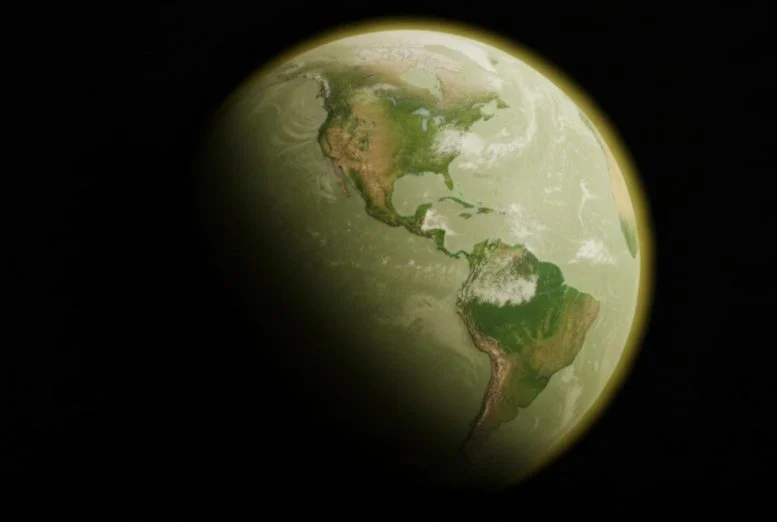
Scientists Solve a 66-Million-Year-Old Climate Mystery That Changed Earth Forever
Scientists have uncovered a surprising mechanism that may explain how Earth cooled dramatically after the age of dinosaurs. Scientists have solved a 66 million-year-old mystery, explaining how Earth shifted from a warm, tropical greenhouse planet…
Continue Reading
-
Why some Central Pacific El Niños die quickly while others linger for years
Predicting the duration of a Central Pacific El Niño event has long frustrated climate scientists and forecasters. Now, a new study reveals that Central Pacific El Niños follow two fundamentally different life cycles—and the difference is…
Continue Reading