
A mosquito finds its target with the help of certain cues in its environment, such as a person’s silhouette and the carbon dioxide they exhale. Now researchers at MIT and Georgia Tech have found that these visual and chemical cues help determine…
Category: 5. Biology
-

3D model predicts mosquito flight paths from sight and CO₂ cues
-
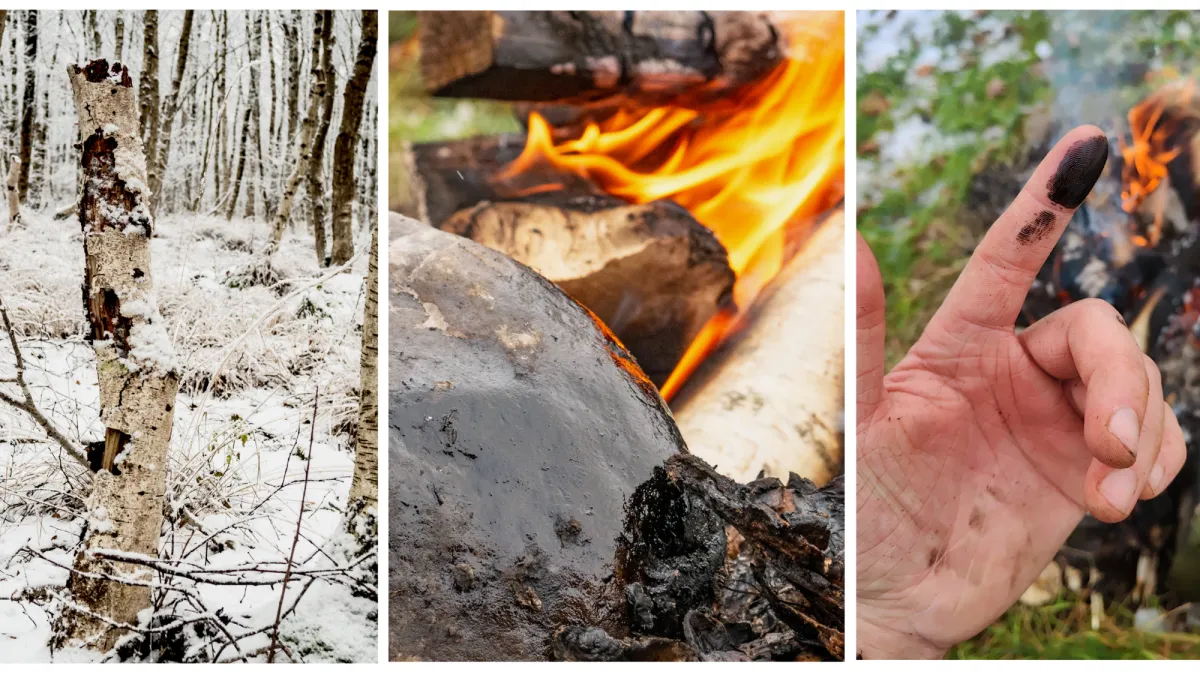
Neanderthals used antibiotics, new experiment suggests
Our ancient ancestors loved their birch tar. Neanderthals likely used the…
Continue Reading
-

Why heights and snakes still hit harder: Study tracks fear sweat in 119 people
Fear-eliciting images of modern and ancestral threats are equally likely to evoke physiological reactions, despite their distinct evolutionary origins, according to a study published in the open-access journal PLOS One by Eva Landová from…
Continue Reading
-

California's lead-ammo bans are working, but expanding condor ranges undercut gains
Recent data showing an increase in lead exposure and deaths among critically endangered California condors seems to fly in the face of decades of conservation measures, including bans on lead bullets and public-education campaigns about the…
Continue Reading
-
Tracking male sea turtles just got easier
Monitoring the populations of one of nature’s slower creatures could become faster, thanks to the University of Georgia. UGA researchers have developed an easier, more cost-effective way to learn more about male marine turtles, a traditionally…
Continue Reading
-
Beavers can turn streams into carbon stores. We measured how much
Across Europe, beaver numbers are increasing after a long period of decline. As these aquatic mammals recolonize rivers, they are gradually rebuilding wetlands that once existed across many river valleys.
Continue Reading
-

Fossilized whale skulls reveal feeding secrets of sharks 5 million years ago
A new study analyzing two fossilized whale skulls from around 5 million years ago has revealed fragments of sharks’ teeth lodged inside them. This provides rare evidence of how sharks fed on whales in north European waters in prehistoric times.
Continue Reading
-
Climate change could pose a major risk to cassava in Africa: Study sets out what can be done now
Cassava is a starchy, tuberous root, introduced to sub-Saharan Africa by Portuguese traders centuries ago. It is a nutrition lifeboat for over 800 million people worldwide.
Continue Reading
-
The fish species that knows when you are watching them
Emperor cichlids, large fish native to Lake Tanganyika in Africa, don’t like being stared at, especially if someone’s gaze is directed at their offspring. Those are the findings of a new study published in the journal Royal Society Open Science….
Continue Reading
-
Pioneering research on salmon louse larvae could better inform parasite control strategies
A first-of-its-kind University of Stirling study could better inform strategies to control salmon lice, after researchers uncovered major differences in the secretions the parasite produces as larvae. Like other parasites, such as mosquitoes and…
Continue Reading