
Cells in our bodies produce RNA based on genetic information stored in DNA, and RNA serves as a blueprint for making proteins. Researchers at KAIST have discovered a new phenomenon: Removing “circular RNA” that accumulates in cells as we age can…
Category: 5. Biology
-

Clearing circular RNA from cells extends lifespan, C. elegans study reveals
-
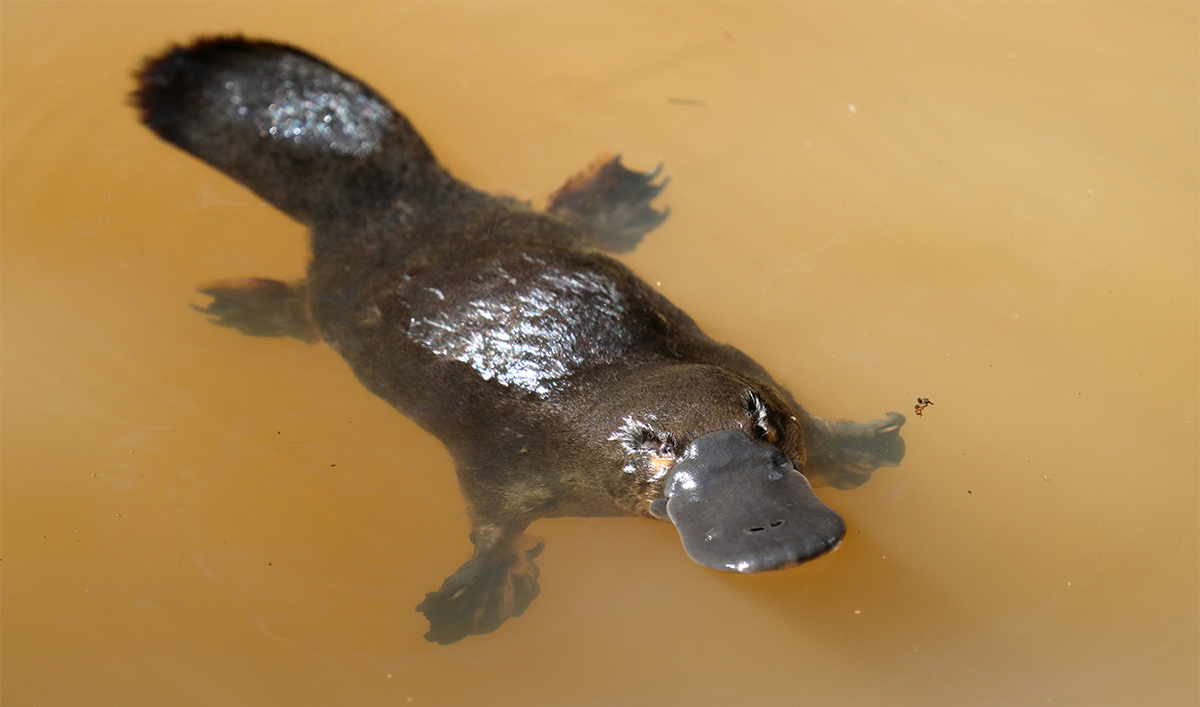
Platypus Anatomy Just Got Weirder
One glance at the platypus and you’ll forgive the naturalists who assumed it was a clever hoax upon first encountering preserved specimens more than 200 years ago. After all, the creatures appear to be a jumble of contradictions—they look…
Continue Reading
-

Seals risk death by polar bear for a varied meal, study finds
As climate change reshapes Arctic food webs, ringed seals will swim into risky polar bear territory if the menu is varied enough. This is the central finding of a new study published in Ecology Letters. UBC researchers tracked 26 ringed seals and…
Continue Reading
-

Plant survival under three simultaneous stressors may hinge on a single protein
Researchers at the University of Missouri have discovered certain proteins may be the key to saving plants’ lives when multiple stressors hit at the same time. This knowledge may one day lead to crops that are more resistant to harsh conditions…
Continue Reading
-

Scientists discover new bee species that depends on native Texas shrub
Entomologists have discovered a new species of mining bee that has an unusually tight relationship with cenizo, the official state shrub of Texas. Silas Bossert, assistant professor in Washington State University’s Department of Entomology,…
Continue Reading
-
Controlling the pinewood nematode: Finding the best balance between cost and effectiveness
The pinewood nematode (Bursaphelenchus xylophilus) is the most devastating parasite of pine forests across Eurasia. To combat the pinewood nematode, European regulation requires that Member States clear-cut all susceptible tree species within a…
Continue Reading
-
How AI deep learning is helping scientists protect California's coastal ecosystems
Researchers at UCLA’s Institute of the Environment and Sustainability have developed the most high-resolution statewide maps of California’s kelp forests to date, giving researchers, conservationists and community members unprecedented access to…
Continue Reading
-
A new antimicrobial for cleaning and sanitizing dry-food processing equipment
Efforts to prevent pathogenic contaminations such as salmonella in dry food processing facilities will take a step forward through new research from the University of Massachusetts Amherst describing a novel chemical mixture for sanitation in…
Continue Reading
-
Increasing the share of organic farming leads to healthier, more diverse soils, international study finds
An international team led by University of Alicante (UA) scientists has found that increasing the share of organic farming may improve crop yields and help maintain soil health and biodiversity. Published in the journal Nature Sustainability, the…
Continue Reading
-

Resurrected 3.2-Billion-Year-Old Enzyme Could Unlock the Origins of Life
By reconstructing ancient nitrogen-processing enzymes, scientists are uncovering new clues about how early life survived on a very different Earth. Nitrogen is essential for life on Earth, yet most organisms cannot use it directly from the…
Continue Reading