
To ensure that the tissue structures of biological samples are easily recognizable under the electron microscope, they are treated with a staining agent. The standard staining agent for this is uranyl acetate. However, some laboratories are not…
Category: 5. Biology
-

Coffee as a staining agent substitute in electron microscopy
-
Biomarker Predicts Therapeutic Outcomes in Patients with Multiple Sclerosis
Multiple sclerosis (MS) is a chronic autoimmune disease in which the immune system attacks the body’s nerves. Immune cells will breakdown the myelin sheath around the nerve fibers that help transport signals…
Continue Reading
-

Heat-inducible promoters show varied expression patterns in sugarcane stems
Inducible promoters provide remarkable utility when sustained transgene expression compromises plant development or agronomic performance.
Continue Reading
-
Strategy over morality can help conservation campaigns reduce ivory demand, research shows
Research has shown that conservation campaigns could turn the tide on the illegal ivory trade if they focused less on themes of ‘guilt’ and more on why people want to buy ivory in the first place.
Continue Reading
-

Some People Get Drunk Without Drinking and Scientists Finally Know Why
A hidden army of gut microbes can brew alcohol inside the body—and scientists may finally know how to stop it. Scientists have identified specific gut bacteria and biological pathways that cause alcohol to be produced inside the body in people…
Continue Reading
-
Searching for the centromere: Diversity in pathways key for cell division
Despite the immense amount of genetic material present in each cell, around 3 billion base pairs in humans, this material needs to be accurately divided in two and allocated in equal quantities. The centromere, located in the middle of each…
Continue Reading
-

UC Davis team creates new class of serotonin-effecting drugs
UC Davis researchers have developed a new method that uses light to transform amino acids – the building blocks of proteins – into molecules that are similar in structure to psychedelics and mimic their interaction with the brain….
Continue Reading
-

How Changes in the Genome are Connected to Aging
There is a genetic feature known as a repeat expansion, in which short sequences are repeated continuously. Some of them naturally get longer as we age, but there are also over 60 diseases that can be caused…
Continue Reading
-
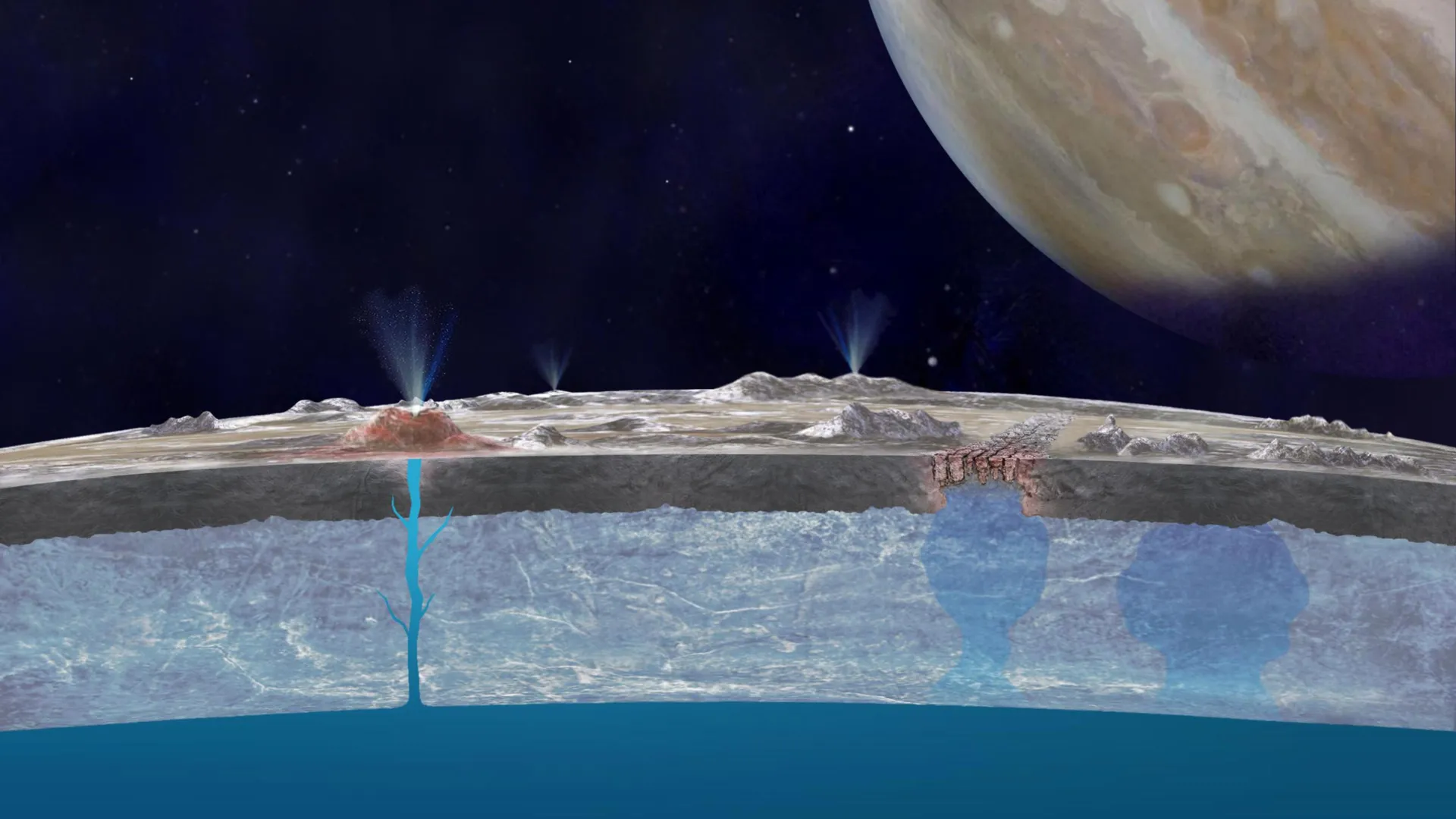
A new study casts doubt on life beneath Europa’s ice
Jupiter has nearly 100 known moons, but Europa continues to stand out as one of the most compelling. Beneath its thick shell of ice, scientists believe the moon contains an enormous ocean of salty liquid water. That possibility has fueled decades…
Continue Reading
-

Why does mint make water taste so cold? A scientist explains
You’ve just cleaned your teeth, you’re feeling minty fresh and ready to climb into bed. You take a sip of water, but the water is icy cold, and your next breath feels cool and crisp.
Continue Reading