
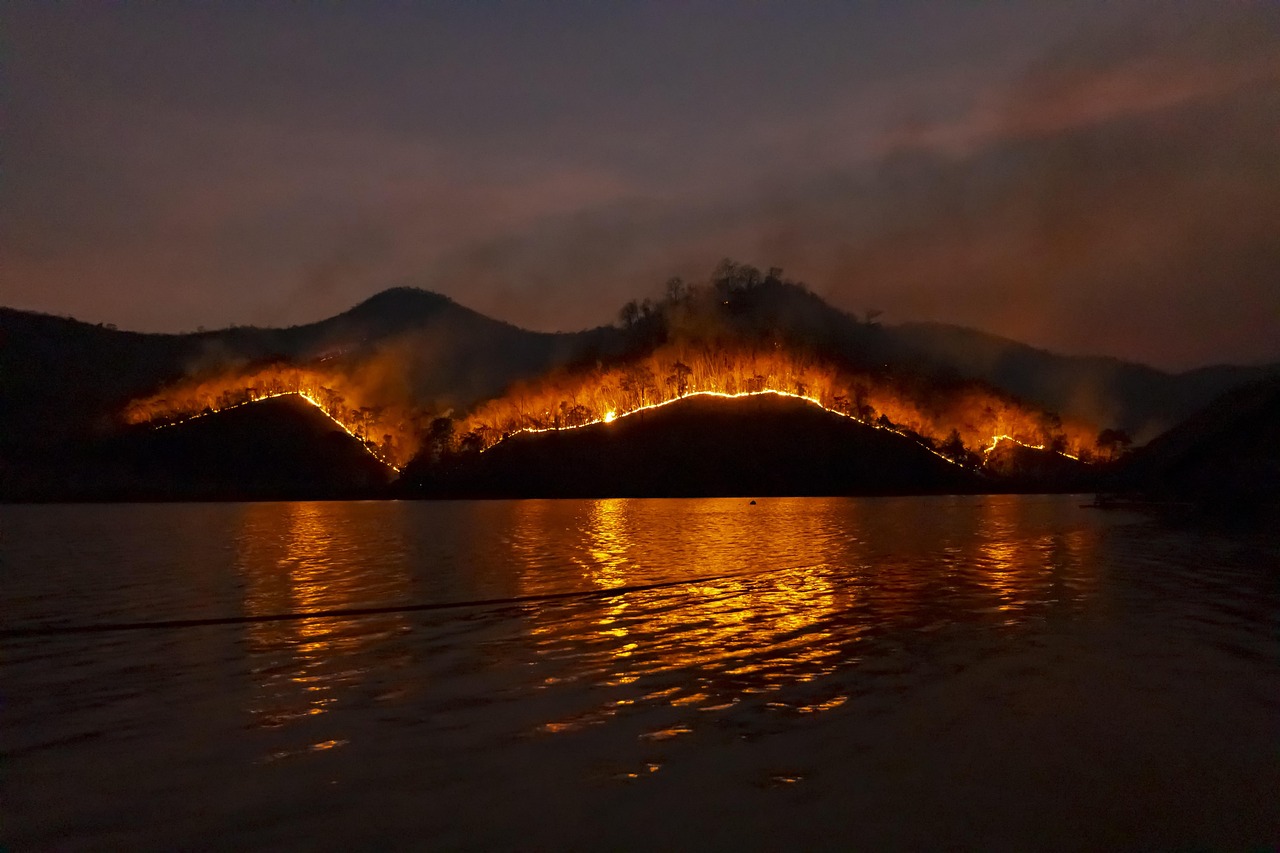
How do wildfires and volcanoes influence the Earth’s temperature? This is what a recent study published in the Proceedings of the National Academy of Sciences hopes to address as a team of scientists from…
Category: 5. Biology
-

AI model analyzes 52 factors to flag extinction risks for 10,000 fish species
Whether it’s redfin pickerel in the Kennebec River or sturgeon in the Great Lakes, nearly one-third of freshwater fish species are facing possible extinction, threatening food supplies, ecosystems and outdoor recreation. As conservationists work…
Continue Reading
-

How studying yeast in the gut could lead to new, better drugs
A new study sheds light on the behavior of yeast cells in the gut, paving the way for new lines of yeast that more efficiently produce therapeutic drugs tailored to address specific diseases. The research is published in the journal BMC Genomics.
Continue Reading
-
Why do microbes team up? A new model explains nutrient sharing in fluctuating environments
Depending on others for something you need may feel like a risky proposition—and perhaps a human one. It is actually a survival strategy found in the microbial world, and far more frequently than one might expect. Discovering why is key to…
Continue Reading
-
The hidden stress facing coral reef fish in the Arabian Gulf
A new study from NYU Abu Dhabi has found that small coral reef fish in the Arabian Gulf are facing a hidden but growing source of stress. When oxygen levels drop at night, a common occurrence on some of the world’s hottest reefs, these fish must…
Continue Reading
-
Nutrient-driven 'death fronts' may explain why some antibiotics fail outside the lab
Antibiotics are medical marvels that have transformed once deadly bacterial infections into manageable conditions. But with a rise in antibiotic resistance that renders existing treatments ineffective, new agents are urgently needed. Scientists…
Continue Reading
-
Mate choice: How social trends influence mate diversity
Whether people follow a general trend when choosing a partner or consciously decide against it has a noticeable impact on the diversity of phenotypes to choose from. This is shown by a new study by the University of Würzburg.
Continue Reading
-
Animals' perception of time is linked to the pace of their life
As you read this, the screen is probably flashing over 240 times per second, yet, as a human, you won’t notice this flickering light. However, to a fruit fly hovering above your head, the screen would represent a strobe light fit for an Ibiza…
Continue Reading
-
Shorter early-life telomere length could predict survival in Arctic seabirds
A study published in Ecological and Evolutionary Physiology reveals a surprising link between cellular aging markers and survival in black-legged kittiwakes (members of the gull family). In the work titled “Who’s coming home? Shorter early-life…
Continue Reading
-
Engineered bacteria can consume tumors from the inside out
A research team led by the University of Waterloo is developing a novel tool to treat cancer by engineering hungry bacteria to literally eat tumors from the inside out. “Bacteria spores enter the tumor, finding an environment where there are lots…
Continue Reading