
Field margins where hedges have been planted attract twice as many insects as those without hedges. This holds true even in agricultural areas that already contain plenty of natural habitat, according to research published in Basic and Applied…
Category: 5. Biology
-

More hedges lead to more insects—even in relatively green agricultural areas
-
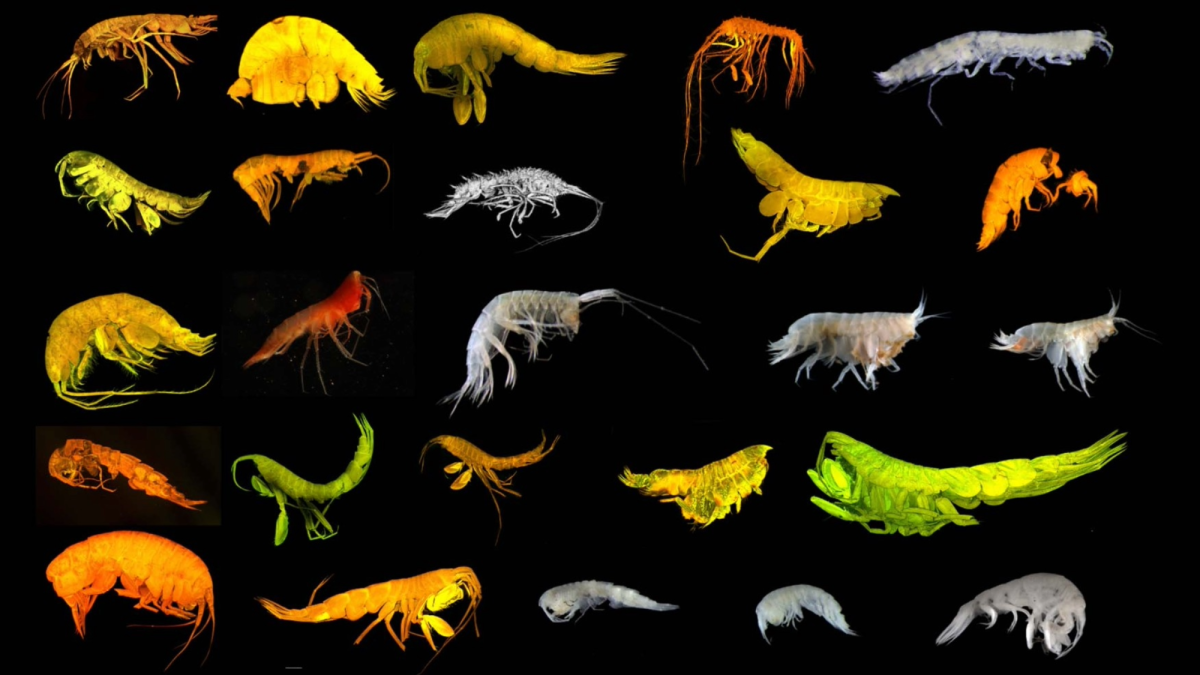
New crustacean named after its unique butt
Only 80 to 90 percent of Earth’s vast oceans have been explored, leaving…
Continue Reading
-

Viruses eavesdrop on signals but risk making harmful decisions
Viruses can “eavesdrop” on each other using chemical signals – but it can backfire for the eavesdropper, new research shows.
University of Exeter scientists studied chemical communication by phages (viruses that infect…
Continue Reading
-

Viruses 'eavesdrop' on each other—but it can backfire
University of Exeter scientists studied chemical communication by phages (viruses that infect bacteria). The phages assessed in the study have two choices when they enter a cell: lie dormant or kill the cell and release new virus particles to…
Continue Reading
-
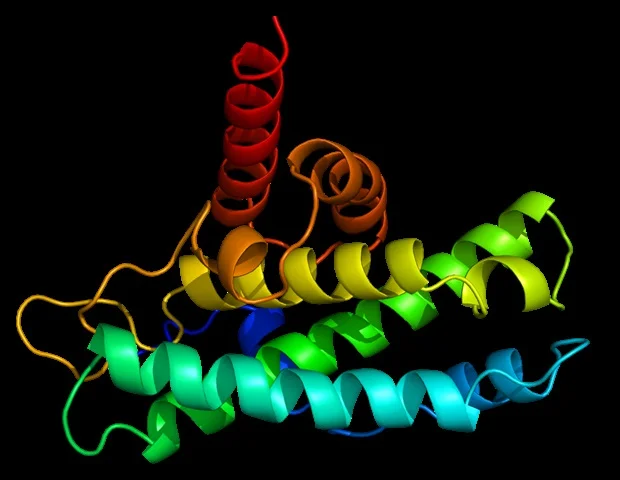
Researchers identify the limiting factors behind protein diversification
The number of known proteins is infinitely small in comparison to the universe of possible proteins which could in theory be realized. Yet these known proteins are the only major training ground for future protein design….
Continue Reading
-

Two new gecko species discovered in Vietnam
The half leaf-fingered geckos (Hemiphyllodactylus) are a diverse group with more than 70 recognized species and a distribution range from southern India and Sri Lanka, through Indochina and Southeast Asia, to the western Pacific region. As a…
Continue Reading
-

A new way to eavesdrop on ocean temperature in the Arctic
New research led by scientists at UC San Diego’s Scripps Institution of Oceanography finds that the travel time of underwater sounds moving across the Arctic Ocean can be used to precisely measure ocean temperature under the region’s sea ice,…
Continue Reading
-

Excessive RNA editing enzyme alters brain circuit formation in Down syndrome
A collaborative research study co-led by scientists at the Icahn School of Medicine at Mount Sinai and the Liber Institute for Brain Development has for the first time identified a biological process that may help explain how the…
Continue Reading
-

Scientists use living muscle to reanimate paralyzed organs
What if a technology could reanimate parts of the body that have lost their connection to the brain – like a bladder that can no longer empty due to a spinal cord injury, or intestines that can’t push food forward due to Crohn’s…
Continue Reading
-
Unlocking designer roots for future cereal crops
A plant signaling gene has been identified as a promising target for breeding cereal crops to produce a steeper, narrower root system architecture, but with associated yield penalties in barley. University of Queensland Ph.D. candidate Richard…
Continue Reading