
Scientists have discovered that, far from being solitary insects, some cockroaches appear to form an exclusive bond with a partner. And how do they get this relationship off the ground? By eating each other’s wings.
Category: 5. Biology
-

Cockroaches that eat each other's wings become exclusive partners
-

New Research Reveals Why Women Experience Longer-Lasting Pain
Hormone-regulated immune cells produce IL-10 to resolve pain more effectively in males, offering a potential new target for non-opioid chronic pain treatments. Chronic pain often lingers longer in women than in men. A new study suggests that…
Continue Reading
-

Study reveals reported crop yield gains from breeding may be overstated
A new study suggests that decades of reported gains in crop yields from plant breeding may be significantly overstated, challenging a common method used worldwide to measure genetic progress. The international research team includes five…
Continue Reading
-

With Evo 2, AI can model and design the genetic code for all domains of life
The DNA foundation model Evo 2 has been published in the journal Nature. Trained on the DNA of over 100,000 species across the entire tree of life, Evo 2 can identify patterns in gene sequences across disparate organisms that experimental…
Continue Reading
-
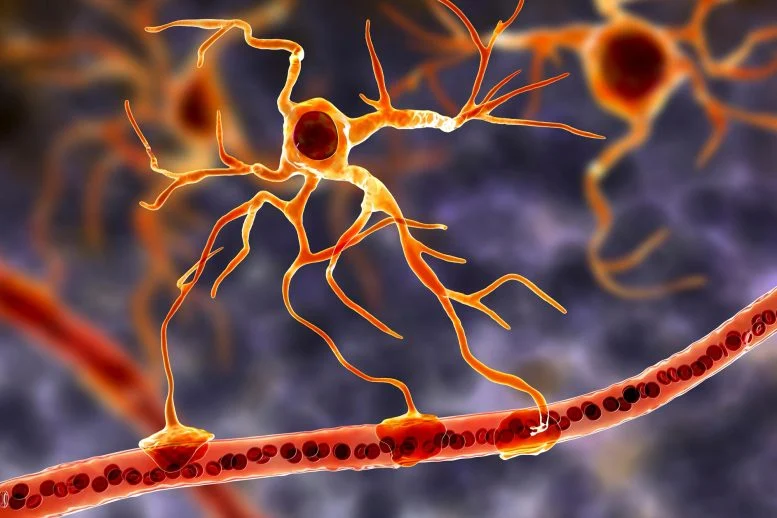
Scientists Overturn Decades-Old Belief About the Brain’s So-Called Support Cells
A new study reveals that astrocytes, once dismissed as mere support cells, play a central role in fear memory. Imagine a star-shaped brain cell extending delicate branches that wrap around nearby neurons. This cell is called an astrocyte. For…
Continue Reading
-
Did the first human ancestor originate in the Balkans? New fossil shows evidence of bipedalism
Walking on two legs has long been considered a milestone in human evolution and one of our most defining characteristics. Until now, researchers assumed that the first humans originated in Africa and that bipedalism developed there around 6…
Continue Reading
-
Creating sustainable supply of declining tree species can support floodplain habitat restoration
A number of native black poplar whips—young unbranched trees—were planted at the campus near Southwell as part of a project involving NTU, the Environment Agency, Nottinghamshire Wildlife Trust, Trent Rivers Trust, Nottinghamshire…
Continue Reading
-

Nitrous oxide, a product of fertilizer use, may harm some soil bacteria
Plant growth is supported by millions of tiny soil microbes competing and cooperating with each other as they perform important roles at the plant root, including improving access to nutrients and protecting against pathogens. As a byproduct of…
Continue Reading
-
Black soldier fly larvae show promise for safe organic waste removal
People and animals create lots of waste that is usually sent to landfills, incinerated, or stored in engineered ponds such as manure lagoons. Now, researchers report a potential removal method using insects, specifically black soldier fly larvae….
Continue Reading
-
Forest exhibits resilience after California mega fire
In 2019 and again in 2021, Penn State researchers in the Department of Geography walked a series of 1,000 square foot plots in California’s Lassen Volcanic National Park. The goal was to see how the forest that’s hands-off to residents and most…
Continue Reading