

A new analysis could reshape the timeline of early human dispersal. An interdepartmental and international research team recently found that our ancient ancestors, Homo erectus, likely appeared in Yunxian, China, about 1.7 million years ago —…
Author: admin
-
Indigenous Peoples and locals report a drastic decline in bird size across three continents
Birds currently inhabiting many territories across Africa, Latin America and Asia are, on average, considerably smaller than those that predominated in 1940. This is the conclusion of an international study led by the Institute of Environmental…
Continue Reading
-
Quantum simulator reveals statistical localization that keeps most qubit states frozen
In the everyday world, governed by classical physics, the concept of equilibrium reigns. If you put a drop of ink into water, it will eventually evenly mix. If you put a glass of ice water on the kitchen table, it will eventually melt and become…
Continue Reading
-

AI is helping hackers make new malware faster and more complex than ever – and things may only get tougher
- Palo Alto warns GenAI accelerates malware creation and complexity
- AI reduces data exfiltration time from five hours to 72 minutes
- Identity weaknesses and SaaS supply chains drive most intrusions, with ransomware shifting to data theft
The rise of…
Continue Reading
-
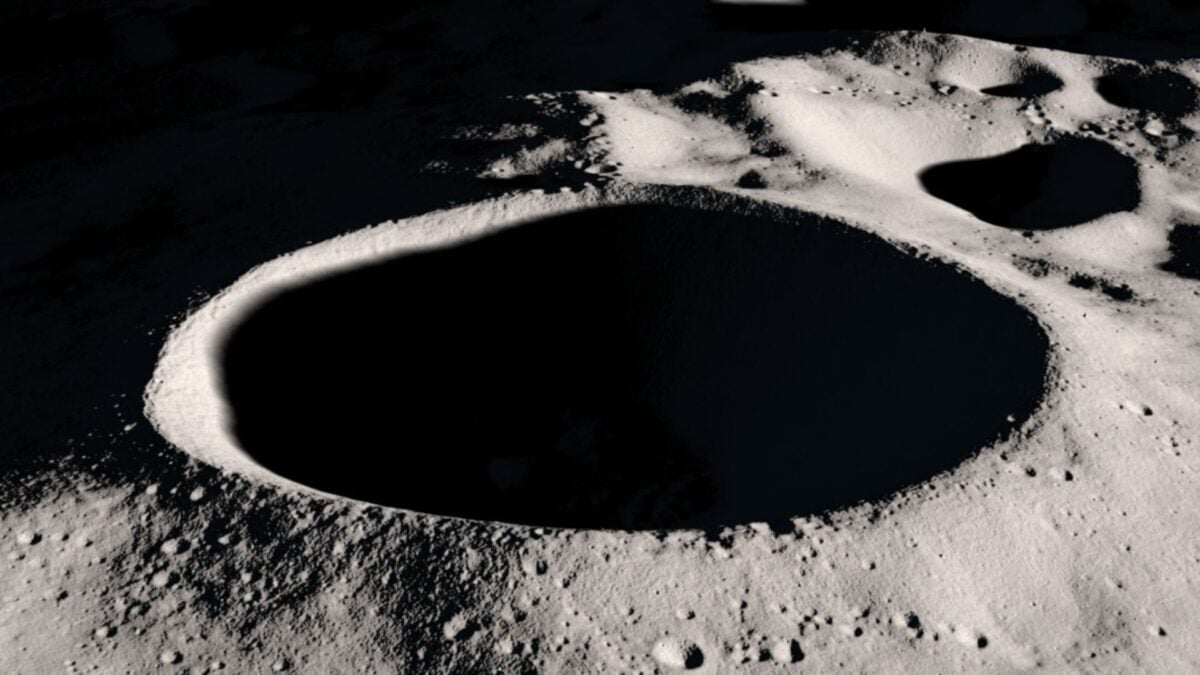
A New Moon Race Starts This Year—and This Time It’s All About the Water
The interior of the Moon’s Shackleton crater is shrouded in eternal darkness. This not only makes it one of the most mysterious geologic features of the lunar south pole but also one of the most promising for harboring precious…
Continue Reading
-
Oxygen May Have Been Key to Sparking the Rise of Complex Life
The story of how complex life began is largely understood, but one contradiction has never quite fit. Plants, animals, and fungi — known collectively as eukaryotes — likely emerged when two very different microbes formed a close alliance. One…
Continue Reading
-
New durable hybrid materials enable faster radiation detection
Researchers at the University of Oklahoma have developed new hybrid materials that challenge conventional thinking about how light-emitting compounds work and could advance the field of fast radiation detection. The research, published in the…
Continue Reading
-
Huntington's disease offers a rare clean test case for brain research
Neuroscience rarely enjoys clean experiments. Most brain disorders are mosaics of risk genes, aging, lifestyle and chance that leave their origins obscured. Huntington’s disease (HD) is different. It begins with a single genetic expansion—a…
Continue Reading
-

Mass grave sheds light on 7th century plague
In modern-day Jordan, a 1500-year old mass grave sheds light on the lives of people affected by the Plague of Justinian.
Continue Reading
-

Benchmark of 1.4 million checked protein structures could sharpen AI predictions
University of Missouri researchers have released the world’s largest collection of protein models with quality assessment—a groundbreaking new resource that could accelerate drug development for diseases such as Alzheimer’s and cancer. The…
Continue Reading